
Kitchen backsplash installation usually takes two to three working days in an Atlanta home: one for prep and layout, one for setting tile, and time for the mortar to cure before grouting and sealing. The tile you pick, the condition of your walls and the number of outlets and corners all change that timeline. Glass and small mosaics take longer than simple ceramic subway tile.
A backsplash is one of the most visible tile jobs in a home, so small details like straight lines, clean cuts around outlets and a neat edge at the countertop make a big difference. Here’s how the process works, how to choose tile for your kitchen, and what to ask before the work starts.
Key Takeaways
- Most backsplash jobs follow the same steps: protect, prep the wall, plan the layout, set tile, let it cure, grout, then caulk the edges.
- Manufacturer specs commonly call for letting setting mortar cure for at least 24 to 48 hours before grouting.
- Glass and mosaic tile need specific mortar and extra care for full coverage.
- The joint where tile meets the countertop should be filled with flexible caulk, not grout.
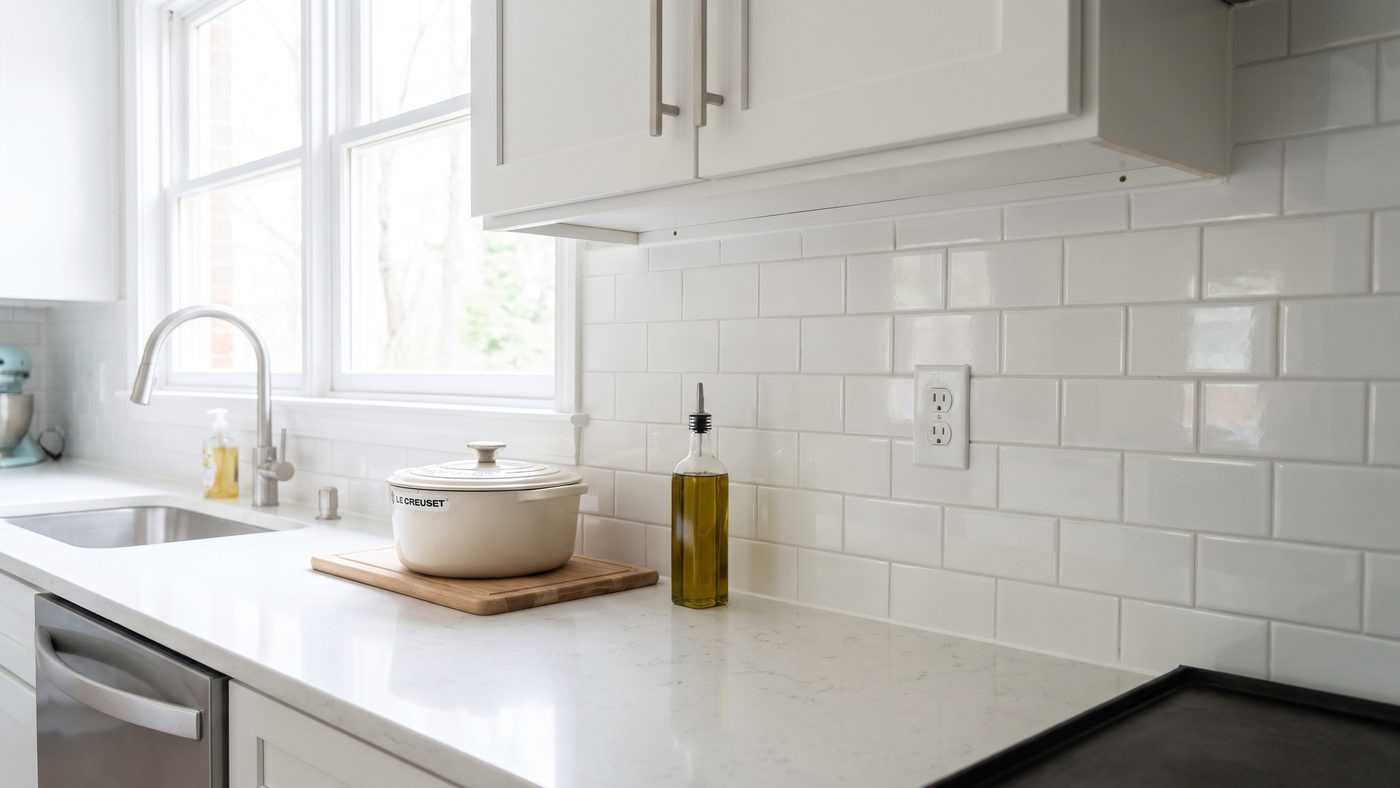
How Long Does Kitchen Backsplash Installation Take?
A typical kitchen backsplash takes about two to three days from start to finish. The hands-on tile work is often done in a day, but the materials need time to set. A guide specification from Sika, a tile setting materials manufacturer, says to let the installation cure completely before grouting, with a minimum of 48 hours (Sika guide specification). Some pre-mixed mortars list 24 to 72 hours depending on tile size and conditions.
Atlanta’s humid summers can slow drying, so a careful installer follows the product’s instructions rather than rushing to grout the same day. Large kitchens with long runs, windows and open shelving take longer, as do patterns like herringbone.
What Happens During a Backsplash Installation?
The work follows a predictable order. Knowing it helps you plan around your kitchen being out of service:
- Protect the space. Countertops, cabinets and floors get covered, and power to outlets in the work area is shut off.
- Prepare the wall. Old backsplash material is removed if needed, holes are patched, and the surface is cleaned so mortar bonds well.
- Plan the layout. The installer finds the visual center, usually the range or sink, and plans cuts so you don’t end up with thin slivers at the ends.
- Set the tile. Mortar is troweled on and tiles are pressed in with spacers to keep joints even. Cuts are made around outlets and switches.
- Let it cure. The mortar sets before any grout goes in.
- Grout and clean. Grout is pressed into the joints, the surface is cleaned, and haze is buffed off.
- Caulk and finish. Flexible caulk goes where tile meets the countertop and cabinets, and outlet covers go back on with extenders if needed.
Which Tile Works Best for an Atlanta Kitchen Backsplash?
The best tile depends on the look you want, how much you cook and how much cleaning you’re willing to do. Here’s a quick comparison of common options:
| Tile type | Look | Installation notes | Upkeep |
|---|---|---|---|
| Ceramic subway | Classic, works in most homes | Straightforward to cut and set | Easy to wipe; grout lines need occasional cleaning |
| Porcelain | Wide range, including stone and concrete looks | Harder to cut; larger sizes need a flat wall | Very low porosity, easy to clean |
| Glass | Bright and reflective | Needs glass tile mortar and full coverage so the mortar doesn’t show through | Wipes clean; shows water spots |
| Natural stone or mosaics | Textured, high-end feel | Many small pieces; stone usually needs sealing | More grout to maintain; some stone stains easily |
Behind the range, choose something easy to scrub. Light grout looks crisp but shows cooking splatter faster, so many homeowners go one shade darker.
What Makes Glass and Mosaic Backsplashes Harder?
Glass tile is see-through, so any gaps or trowel lines in the mortar behind it can show. TEC’s backsplash and glass tile guide calls for a mortar made for glass tile, flattening the trowel ridges into a smooth bed, and back-buttering individual glass tiles to get full coverage (TEC guide). It also says to check with the glass tile maker for specific requirements and notes that unsanded grouts are typically used for wall and backsplash work.
Mosaic sheets bring another challenge: keeping the sheet seams invisible. That takes careful spacing and pressing each sheet evenly into the mortar. In homes around Buckhead Village, where marble and glass mosaics are popular, this detail work is a big part of the finished look.
Why Shouldn’t the Countertop Joint Be Grouted?
The countertop and the wall are separate surfaces that move slightly on their own, so the joint between them should be flexible. Sika’s specification says to use sealant instead of grout at changes in plane, and the Ceramic Tile and Stone Consultants explain that movement joints let tile assemblies handle normal expansion and contraction without cracking (CTaSC). The same goes for inside corners and the edges where tile meets cabinets.
If you see a cracked grout line along the counter of an older backsplash, this is often why.
What Should You Ask Before Your Backsplash Is Installed?
- Will you remove the old backsplash, and how will you protect my counters?
- Where will the layout start, and where will cut tiles land?
- How will you handle outlets, switches and under-cabinet lighting?
- What mortar and grout will you use for my tile type?
- How long should the mortar cure before grouting?
- Will the countertop joint and corners be caulked?
How Atlanta Tile Installer Can Help
Atlanta Tile Installer handles kitchen tile installation, including backsplashes, for homes across Atlanta, Buckhead, Midtown, Sandy Springs and nearby neighborhoods. Our team can help you compare tile options, plan a layout that suits your kitchen and walk you through the timeline before work begins.
Frequently Asked Questions
Can you install a backsplash over existing tile?
Sometimes, if the old tile is solidly bonded, flat and cleaned or roughened so new mortar can grip. It adds thickness, so outlets and trim may need adjusting. Removal is often cleaner for a long-lasting result.
Should a backsplash go all the way to the ceiling?
It’s a design choice. Many kitchens stop at the bottom of the upper cabinets, while full-height tile behind a range hood or on open-shelf walls can make a strong statement. Ask to see how the layout will end at the top edge.
Do I need to seal my backsplash?
Ceramic and porcelain tiles usually don’t need sealing, but cement-based grout and natural stone often do. Follow the grout and stone manufacturer’s recommendations.
Can I use the kitchen while the backsplash is being installed?
You can usually use the sink and fridge, but plan on the counters being covered during prep, tiling and grouting. Once grout and caulk have set, normal cooking can resume.
Planning a new kitchen backsplash? Call Atlanta Tile Installer at 678-719-4859 or reach out through our contact page to talk about your project.