
Large format tile installation means setting tiles with at least one side 15 inches or longer, such as 24 by 48 inch porcelain planks or slabs. These tiles need a flatter floor, more mortar coverage and careful layout than standard tile. Done well, they give Atlanta kitchens, living areas and bathrooms a clean look with fewer grout lines.
Big tiles are popular in new builds and remodels from Midtown condos to Sandy Springs homes. They can look stunning, but they’re less forgiving than small tile. This guide covers what makes large format tile different, how installers prepare the floor and what to ask before your project starts.
Key Takeaways
- Large format tile generally means tile with any side 15 inches or longer.
- The floor under large tiles needs to be very flat, often within 1/8 inch over 10 feet.
- Industry standards call for at least 80 percent mortar contact in dry areas and 95 percent in wet areas.
- Offset patterns with big tiles are usually limited to a one-third offset to reduce uneven edges.
What Counts as Large Format Tile Installation?
TileLetter’s article “Large-format tile: know your numbers” notes that there is no formal definition for ceramic tile, but tiles over 15 inches on one side are generally accepted as large format. That includes popular sizes like 12 by 24, 24 by 24, 24 by 48 and long wood-look planks. Many of these are porcelain, which is dense and durable for floors and walls.
The appeal is easy to see. Fewer grout joints make a room feel bigger and calmer, and large tiles suit open floor plans, modern bathrooms and kitchen floors that flow into living spaces. The trade-off is that any small dip in the floor or uneven trowel work shows up more clearly.
Why Does Floor Flatness Matter So Much?
Floor flatness matters because a long, rigid tile can’t bend to follow dips and humps the way smaller tiles can. If the floor isn’t flat, edges sit higher than their neighbors, and the tile may not be fully supported underneath.
The Large Format Tile Installation Guide from GS Tile notes that for tiles 15 inches or larger, substrate flatness should be no greater than 1/8 inch in 10 feet, with no more than 1/16 inch variation in 24 inches. That’s tighter than what’s needed for small tile.
To reach that standard, installers check the floor with a long straightedge and may grind high spots or use a self-leveling underlayment to fill low areas. This prep step often takes as much care as setting the tile itself.
How Much Mortar Coverage Does Large Format Tile Need?
Large format tile needs enough mortar under it to support the whole tile, especially the corners and edges. An article in Stone World on ANSI tile standards explains that ANSI A108.5 calls for at least 80 percent contact in dry interior areas and at least 95 percent in exterior and wet interior areas, spread out so the tile is fully supported.
To get there, installers typically:
- Use a large notched trowel sized for the tile and comb the mortar in straight lines
- Back-butter the tile with a thin layer of mortar on the back
- Set the tile and move it slightly across the ridges to collapse them
- Lift a tile now and then to check coverage
Mortars made for large and heavy tile help keep the tile from sagging while it cures.
What Is Lippage and How Do Installers Prevent It?
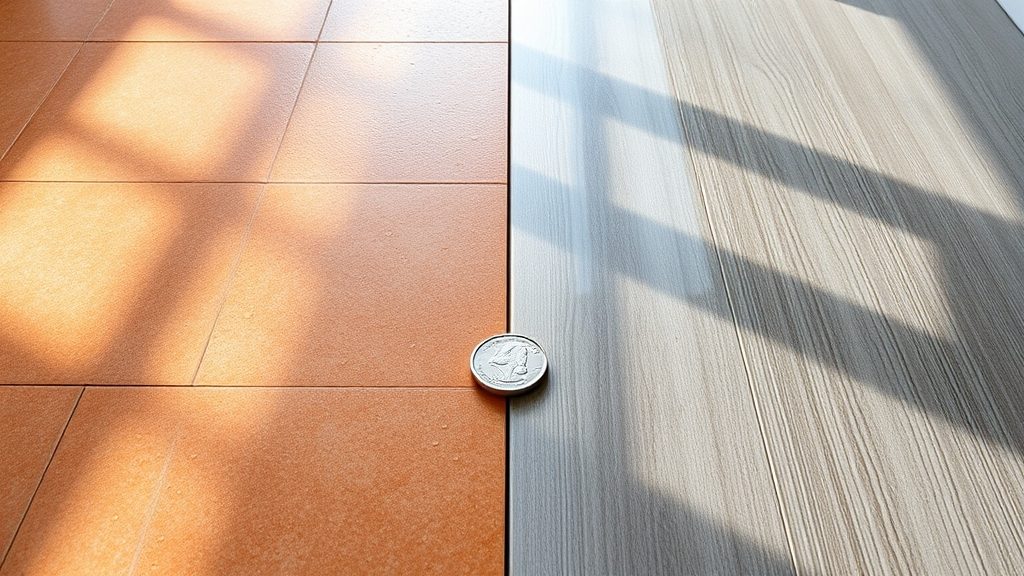
Lippage is when one tile edge sits higher than the tile next to it. It’s more noticeable with large tiles, especially when light from a window or wall fixture skims across the floor.
Standards set limits on how much lippage is acceptable, and layout plays a big part. The Stone World article explains that ANSI A108.02 limits offset patterns to an offset of 33 percent or less when the offset side is longer than 15 inches, unless the owner approves a mockup. That’s why many installers recommend a one-third offset instead of a half offset for long planks.
Leveling clip systems are also common. They hold neighboring tile edges in line while the mortar cures, then snap off before grouting.
Where Does Large Format Tile Work Best in Atlanta Homes?
Large format tile works well almost anywhere a clean, open look is the goal. Popular spots include:
- Open living areas and kitchens. One continuous tile floor running through connected rooms makes a space feel larger.
- Bathroom walls and shower walls. Big wall tiles mean fewer grout joints to clean in a wet area.
- Entryways and halls. Long planks laid lengthwise can make a narrow hall look wider and longer.
- Basements on concrete slabs. Porcelain handles moisture well, though the slab still needs to be checked for flatness and cracks.
Older Atlanta homes with wood subfloors may need extra prep. Plank floors can flex more than a concrete slab, so installers often check the framing and add an underlayment before setting large tiles.
How Long Does a Large Format Tile Floor Take?
Timing depends on the room size, the condition of the floor and how much leveling is needed. A typical project includes removing old flooring, prepping and leveling the floor, setting the tile, letting the mortar cure and then grouting. Self-leveling products and mortar each need cure time, so it’s common for a floor to take a few days from start to finish. Your installer can give you a timeline after seeing the space.
How Atlanta Tile Installer Can Help
Atlanta Tile Installer sets large format tile on floors and walls in homes across Atlanta, including tile installation in Sandy Springs. Our team checks floor flatness, plans the layout around your room and handles leveling, setting and grout. Learn more about our flooring installation in Atlanta.
Frequently Asked Questions
Can large format tile go over an existing tile floor?
Sometimes, if the old tile is well bonded, flat and the added height works with doors and transitions. Your installer will check before recommending it.
Do large format tiles crack more easily?
Large tiles can crack if they aren’t fully supported. Good mortar coverage and a flat floor are the best ways to prevent that.
What grout joint size works with large format tile?
Joint size depends on the tile and the manufacturer’s directions. Rectified tiles often allow narrower joints, but the joint needs to be wide enough for the tile’s size variation.
Is large format tile a good choice for showers?
Yes, on walls especially. Shower floors need slope to the drain, so large tiles may be cut or paired with a linear drain.
Is large format tile harder to install than standard tile?
Yes. The tiles are heavier, need flatter floors and take more care to get full mortar coverage, so experience with large tile matters.
Why do some large tile floors look uneven at night?
Low-angle light makes small height differences between tiles stand out. Careful prep, coverage and layout help keep the floor looking smooth.
Planning a large format tile floor in Atlanta? Call Atlanta Tile Installer at 678-719-4859 to talk through your project.